

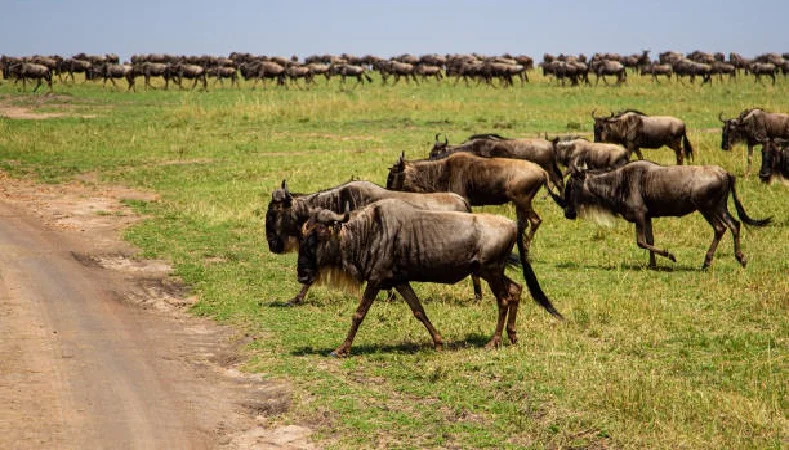
5 days Ndutu Migration Safari during the calving season is a fantastic opportunity to witness one of nature's most remarkable events—the annual wildebeest migration in Tanzania's Ndutu region. The calving season occurs from late January to early March, when thousands of wildebeest gather in the Ndutu plains to give birth to their young.
We'll pick you up from your hotel in Arusha and transport you to the airport so you can catch a flight to the Ndutu Area. You will meet your tour guide/driver when you arrive, and you will then go on a game drive. The Lake Ndutu region is a component of the southern Serengeti eco-system and is located in the Ngorongoro conservation area.
Like the majority of the other Rift lakes, Lake Ndutu has alkaline water, but it is nonetheless potable and is used by a variety of regional fauna. The short-grass plains typically host the majority of the wildebeest migration from December to April. Elephants, birds, and other local wildlife are frequently present in large numbers in the region.
After breakfast, go on a game drive in the Ndutu Area, return to the camp for lunch, and then go on another game drive in Seronera. Following the Great Migration paths through the bush. There will be a full description of this major international event, which Tanzania may be proud of. The Serengeti, Tanzania's oldest and most well-known national park, is known for its yearly migration in the evening as the sun sets. It is also a world heritage site and was recently named the seventh wonder of the world.
Early in the morning, go on a hot air balloon safari before returning to the camp for breakfast. After that, we'll embark on a game drive to Seronera. The park is also recognized for having a robust population of various local fauna, especially the "big five," which were called after the five most valuable hunting trophies: Lion:
The Serengeti is said to have the biggest number of lions in Africa, in part because there are so many different kinds of prey animals there. The lion population in this habitat is above 3,000. African Leopards are solitary predators that are often spotted.
After breakfast, we'll continue our game drive in the Seronera area, and in the afternoon, we'll go to the Ngorongoro Conservation Area.
A million wildebeest...each one driven by the same ancient rhythm, carrying out its instinctive function in the inevitable cycle of life: a frenzied three-week period of territorial conquests and mating; survival of the fittest as 40km (25 mile) long columns plunge through crocodile-infested waters on the annual exodus north; replenishing the species in a brief population explosion that produces more than 8,000 calves per day before the 1,000 km (600 miles) journey
After breakfast in the morning, we'll go out, arriving at Ngorongoro Crater by 11 AM. After that, we return to Arusha and drop you off at the airport so you can take a flight home or to your next location.
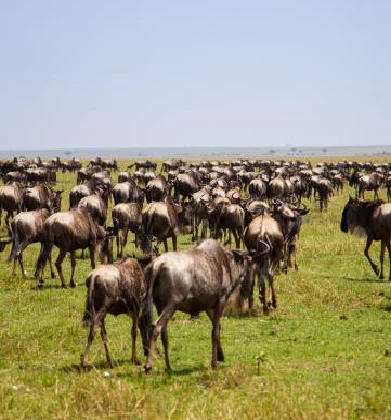
The calving season takes place in the Ndutu region of the Serengeti, usually between January and March, although the exact timing can vary.
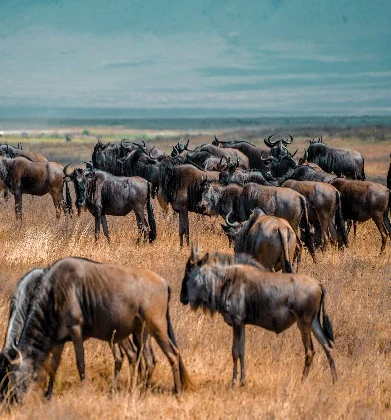
On this 8 days Ndutu migration safari, you will get a unique opportunity to experience the most incredible 4 parks of the northern circuit of Tanzania, which are Tarangire...

The wildebeest migration river crossing begins in July and travels north, passing through the Lobo and Wagakuria regions on its route to Kenya's Masai Mara Game Reserve.
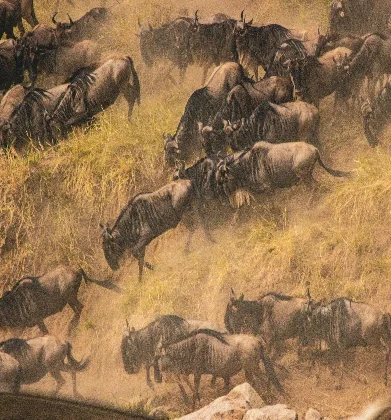
This seven-day Great Serengeti Migration safari package has been especially created to concentrate on and improve your chances of viewing the Great Serengeti Wildebeest Migration.